PLA vs PETG: Which 3D Printing Filament Should You Use? [2026 Guide]
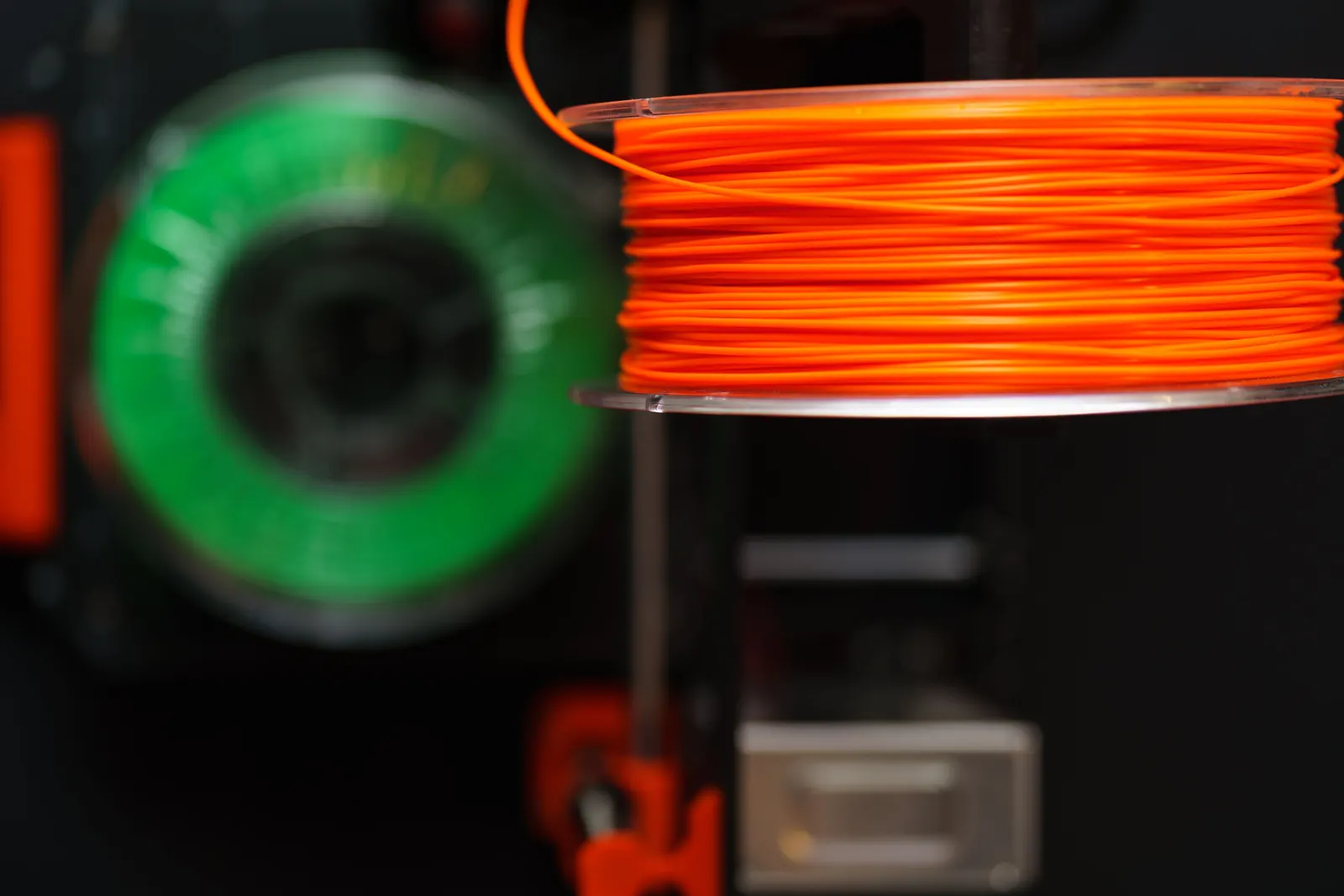
Short answer: PLA is the better filament for beginners, miniatures, prototypes and decorative prints because it is easier to print and holds fine detail. PETG is the better filament for functional, outdoor and warm-environment parts because it is tougher and more heat resistant. Prusa's PLA guide says PLA softens and deforms above 60 °C, while Prusa's PETG guide rates PETG parts for use below 80 °C.
- Miniatures and detail: PLA. It holds finer detail, bridges better and strings less.
- Strength and impact: PETG. It flexes before it breaks, while PLA is brittle and snaps.
- Heat and sunlight: PETG. PLA softens above 60 °C and degrades under UV; PETG is rated for most outdoor use below 80 °C.
- Ease of printing: PLA. Prusa prints it at 210–215 °C with a 60 °C bed, versus 230–240 °C and an 85–90 °C bed for PETG.
- Cost: about the same. PLA is usually slightly cheaper from the same brand.
- Food contact: neither, without a food-safe coating. Prusa does not recommend printed parts of either for food.
PLA and PETG are the two filaments I reach for most. Which one should you actually use? After years of running both through my Fenrir CoreXY and Ymir CrossXY builds, I've learned when to reach for each.
This isn't going to be some academic comparison. I'm going to tell you what actually works, what's annoying, and where each material shines, based on real prints I've done.
PLA vs PETG for miniatures
PLA is better than PETG for miniatures on an FDM printer.
Thin spears, capes and outstretched arms. Miniatures punish any filament that strings, sags on overhangs or clings to its supports.
PLA bridges and handles overhangs better than PETG, strings less and gives crisper small details, which matters at tabletop scale.
Prusa lists "not great for printing detailed parts" and "poor bridging and overhangs" among PETG's cons, and PETG supports are harder to remove, which is a problem on thin limbs and weapons.
- Display and painted minis: PLA. It takes primer and paint well (see how to paint 3D prints).
- Gaming pieces that get dropped or handled a lot: PETG, or a tough PLA, because PETG flexes before it breaks while standard PLA snaps.
- Terrain and scenery: PLA for indoor tables; PETG if it lives in a hot car, loft or outdoors.
- Highest detail at 28–32 mm scale: a resin printer beats both filaments; FDM minis benefit most from a smaller nozzle (0.2 mm) and low layer heights.
TL;DR: Quick Comparison
PLA is better on ease of printing, detail and price; PETG is better on strength, heat resistance and outdoor durability. Heat ratings below are from Prusa's material guides; temperatures are typical ranges across brands.
| Property | PLA | PETG |
|---|---|---|
| Ease of Printing | Very easy | Moderate |
| Strength | Moderate (brittle) | High (flexible) |
| Heat Resistance | Softens above 60 °C | Rated for use below 80 °C |
| Nozzle Temp | 190–220 °C | 230–250 °C |
| Bed Temp | 50–60 °C | 70–85 °C |
| Cost | $ | $ |
| Best For | Prototypes, decorative prints | Functional parts, outdoor use |
What is PLA?
I reach for PLA about 80% of the time, and it isn't for the eco story. I use it because it just works.
PLA (polylactic acid) is the easiest common 3D printing filament to print. It's a bioplastic made from renewable resources like corn starch or sugarcane, which sounds nice on paper but honestly isn't why I use it.
Why PLA is Great
PLA is the easier filament to print: it needs lower temperatures, barely warps and does not need an enclosure. First off, PLA prints like a dream.
On my Fenrir I can run PLA at 200 °C on the nozzle and 55 °C on the bed and get perfect first layers almost every time. No warping drama, no adhesion issues, no babysitting required.
That is huge when you're iterating on a design and need to crank out five versions in an afternoon.
The detail you can get with PLA is also excellent. Those crisp overhangs and clean bridging? PLA handles them better than PETG in my experience.
If you're printing miniatures, architectural models, or anything where surface finish matters, PLA is your friend.
And honestly, the smell is... fine? It's got this slightly sweet smell that doesn't bother me at all. Way better than ABS (which I try to avoid unless absolutely necessary).
Where PLA Falls Short
PLA's main weakness is heat: Prusa says PLA gets soft and deforms above 60 °C, and it also degrades under UV light. The big one is heat resistance.
Leave a PLA print in your car on a summer day and you'll come back to a warped mess. I learned this the hard way with some cable clips I printed for a friend. They worked great until July hit and suddenly they were all droopy and useless.
PLA is also brittle. Drop a PLA part and there's a good chance it'll crack or shatter.
It's not flexible at all: try to bend it and it'll just snap. That makes it bad for living hinges, clips, or anything that needs to flex even a little.
And while the "biodegradable" thing sounds environmentally friendly, PLA needs industrial composting conditions to actually break down. It's not going to magically disappear in your backyard. Just something to keep in mind.
What is PETG?
Drop a PETG bracket and it bends a little and survives. Drop the same bracket in PLA and you may be sweeping up pieces.
PETG (polyethylene terephthalate glycol-modified) is a tougher, more heat-resistant filament than PLA. It's the same family of plastics as water bottles, but modified to be better for 3D printing. And it shows: this stuff is seriously durable.
Why PETG is Great
PETG's main advantages are toughness, heat resistance and outdoor durability, and strength is the biggest selling point. PETG parts can take a beating.
I've printed toolbox organizers, phone mounts, and even some light-duty mechanical parts with PETG, and they're still going strong months later. Unlike PLA, PETG has some flex to it before it breaks, which makes it way more forgiving in real-world use.
The heat resistance is also a massive upgrade. PETG can handle temperatures up to about 80 °C before it starts getting soft. Car interiors, outdoor planters, kitchen organizers: all fair game.
I printed some brackets for LED strips in my workshop, and they sit right next to the lights with no issues at all.
PETG is also more resistant to UV and moisture than PLA. If you're printing something that'll live outside or in a humid environment, PETG won't degrade nearly as fast.
Where PETG Falls Short
PETG is harder to dial in than PLA: it strings more and sticks almost too well to the bed. It's not impossible, but there's definitely more trial and error involved.
On my Ymir CrossXY I run PETG at 245 °C on the nozzle and 80 °C on the bed, and even then I need to dial in retraction settings carefully to avoid stringing. And oh boy, does PETG string if you don't have your settings dialed in.
Layer adhesion is almost too good with PETG. It'll weld to your build surface so well that you might damage your bed trying to get it off.
Prusa recommends a textured or satin sheet for PETG and warns it can damage a smooth PEI sheet. Never print it directly on glass unless you want to risk chipping it.
The surface finish also isn't as nice as PLA. PETG has a glossier, more "plastic" look to it. Great for functional parts, less great if you're trying to make something pretty.
Head-to-Head Comparison
PLA is ahead of PETG on print difficulty, appearance and cost; PETG is ahead on strength, durability and temperature resistance.
Print Difficulty
PLA is easier to print than PETG. If you're new to 3D printing, start with PLA. You'll get successful prints faster and learn the fundamentals without fighting your material.
PETG needs more tuning of retraction distance, temperature and cooling, and you'll probably deal with stringing until you get it right.
That said, once you've got PETG dialed in for your printer, it's not that bad. I keep separate profiles saved in my slicer for both materials so I can switch without hassle.
Strength & Durability
PETG is the clear winner for anything functional. It's stronger, more impact-resistant, and has that flex that prevents catastrophic failure. PLA is fine for display pieces or things that won't see stress, but if you need a part that'll actually do something, reach for PETG.
The material also changes how you should design the part: a clip that flexes fine in PETG can snap in PLA. My guide on how to design parts for 3D printing covers designing for each material, and if a print still fails, 30 common 3D printing problems and solutions helps you find the cause.
I've printed drawer organizers in both materials. The PLA ones cracked when I dropped a heavy tool in them.
The PETG ones? Still perfect.
Temperature Resistance
PETG is the more heat-resistant filament. Prusa says PLA softens and deforms above 60 °C, while PETG parts suit indoor and most outdoor use below 80 °C (Prusa PETG guide).
That covers most everyday scenarios. Unless you're dealing with engine bays or direct sunlight in extreme climates, PETG will handle it.
Appearance & Finish
PLA is the better-looking filament out of the box. The matte finish, the crisp details, the clean overhangs: it just looks more refined. PETG has that shiny plastic look that screams "3D printed part" (which sometimes is fine, but sometimes isn't).
If you're printing something decorative or a prototype you want to show off, PLA is the way to go.
Cost
PLA is usually slightly cheaper than PETG from the same brand, though the gap is small and prices change with sales. Prusa describes both as inexpensive materials. For brands and current prices, see the complete filament guide.
Safety & Fumes
PLA and PETG are both milder to print than ABS, and PLA is the less smelly of the two. PLA has that slightly sweet smell (from the corn starch). PETG is also considered safe, though its smell is a little more noticeable: nothing like ABS, but worth having ventilation anyway.
I print both in my workshop with good airflow and haven't had any issues. Just don't go huffing your printer fumes and you'll be fine.
When to Use Which
Ask one question of every part: will it ever get hot, wet, dropped or bent? If not, print it in PLA.
Use PLA When:
PLA is the right filament when detail, ease and speed matter more than toughness or heat resistance.
- You're learning to print - Seriously, start here. You'll have way more fun and way fewer failed prints
- You need high detail - Miniatures, models, prototypes that need to look good
- Heat isn't a factor - Indoor use only, no hot environments
- Cost matters - It's cheaper and you can burn through test prints without guilt
- Speed matters - PLA prints fast and reliably, great for quick iterations
Use PETG When:
PETG is the right filament when a part must take impacts, flex, moisture or temperatures up to about 80 °C.
- You need strength - Functional parts, mechanical components, anything load-bearing
- Heat resistance matters - Car parts, outdoor use, near electronics/lights
- Flexibility is needed - Living hinges, clips, anything that needs to bend slightly
- Moisture resistance matters - Outdoor planters, bathroom organizers, etc.
- UV exposure - Anything that'll sit in sunlight
Real Examples from My Workshop
Honestly, I reach for PLA about 80% of the time. Most of what I print is prototypes, jigs, organizers, or parts that don't need to be bulletproof. PLA gets me there faster and with less fuss.
But when I'm printing something like a mount for my toolbox, a bracket that'll hold actual weight, or parts for outdoor projects? PETG every time.
I've got PETG cable management clips on my printers themselves. They've held up through temperature swings and constant handling for over a year now.
What I'd buy
The spools I'd buy first are from brands I already recommend in my complete filament guide. All four are 1.75 mm, 1 kg spools, so check that your printer takes 1.75 mm.
Disclosure: the Amazon links below are affiliate links (tag tinkeratlas0c-20). If you buy through them I may earn a commission at no extra cost to you.
- PLA: Hatchbox PLA, black · Polymaker Matte PLA, charcoal black
- PETG: Overture PETG, black · Polymaker PETG, black
FAQ
Is PLA or PETG better for miniatures?
PLA is better for miniatures on an FDM printer: it holds finer detail, bridges better, strings less and paints easily. Use PETG only for gaming pieces that need to survive drops, and consider resin if you want the finest detail.
Is PETG cheaper than PLA?
PETG is usually not cheaper than PLA. From the same brand, PLA is typically slightly cheaper, but the gap is small and sales often erase it; Prusa describes both as inexpensive materials. Choose on properties, not price.
Does PETG string more than PLA?
PETG is more prone to stringing than PLA, so it needs more careful retraction and temperature tuning. It also prints hotter: Prusa recommends 230–240 °C for PETG versus 210–215 °C for PLA. PLA can string too, and Prusa fixes it the same way, with retraction settings.
PLA vs PETG fumes: is PETG as safe as PLA?
PLA and PETG are both far milder to print than ABS. PLA has a faint sweet smell; PETG is a little more noticeable. I print both with good airflow, and I'd keep any printer in a ventilated room or workshop rather than a bedroom.
What temperatures do PLA and PETG need?
PLA is the cooler filament, printing about 25–30 °C below PETG. Prusa recommends 215 °C for the first layer and 210 °C after that, with a 60 °C bed, for PLA (a heated bed is optional), and 230 °C for the first layer and 240 °C after that, with an 85–90 °C bed, for PETG. Other brands vary, so check the spool label. If the first layer still won't stick, go through bed levelling, Z offset and flow in order.
Does PETG degrade in sunlight?
PETG is the better filament for sunlight and outdoor use. Prusa rates PETG parts for interior and most exterior use below 80 °C, while PLA degrades under UV light and softens above 60 °C, so a PLA part on a sunny windowsill or in a hot car can sag.
Is PLA or PETG easier to paint?
PLA is easier to paint than PETG because its matte surface gives primer and paint something to grip. PETG's glossy surface takes paint too, but scuff it with sandpaper and prime it first. I've had good luck with acrylic paints on both.
Which one is better for threads and screws?
PETG is better for threads and screws. The flexibility means the threads won't crack as easily when you screw into them.
PLA threads work fine for light-duty stuff, but they can strip or crack if you overtighten. For anything mechanical, PETG is safer.
Does PETG warp like ABS?
PETG is far less prone to warping than ABS; Prusa notes it has very little thermal expansion. PETG can have slight warping on large prints if your bed adhesion isn't perfect, but it's nothing like ABS.
With a heated bed at 75–80 °C and proper first-layer squish, PETG stays put. Just watch out for the corners lifting if your enclosure is too hot.
Can I print PLA and PETG on the same printer?
PLA and PETG are both printable on any printer that reaches about 240 °C on the nozzle and 85 °C on the bed. You just need to adjust your temperature settings. Those nozzle and bed figures are two of the specs covered in 3D printer specifications explained.
I switch between them all the time on my Fenrir. Just make sure you have separate slicer profiles saved so you don't forget to change settings and end up with a mess.
Which is better for multicolor or gradient prints?
PLA is the better choice for multicolor and gradient prints. It comes in way more colors and specialty types (silk, color-change, glow-in-the-dark, etc.). If you are choosing a printer for multicolor work, my Snapmaker U1 vs Bambu Lab P2S comparison covers toolchangers versus a shared-nozzle AMS.
PETG has fewer options, and the glossy finish can make color transitions less smooth-looking. If aesthetics matter, go PLA.
Are PLA and PETG food safe?
PLA and PETG are both considered food-safe as raw materials, but Prusa does not recommend 3D printed parts of either for food contact, because bacteria can grow in the grooves between layers. If you go ahead anyway, Prusa suggests a stainless steel nozzle and a food-safe coating (epoxy for PETG).
For anything that touches food regularly, print a mold and cast it in food-grade silicone, or buy an injection-molded part. Sources: Prusa PLA, Prusa PETG.
Final Thoughts
Look, both PLA and PETG have their place. I'm not going to tell you one is "better" because it totally depends on what you're making.
If you're just starting out, grab some PLA and learn on that. It's forgiving, cheap, and you'll get good results quickly. Once you've got the basics down and you need something tougher, that's when you graduate to PETG.
For me, the rule of thumb is simple: PLA for pretty things and prototypes, PETG for things that need to work. If it's going to live in the real world and take abuse, I print it in PETG. If I just need to see how something looks or test a fit, PLA gets me there faster.
Printing both in the same part on a multi-material printer? PLA and PETG don't weld to each other, which makes them a good breakaway support pair rather than a bonded one. The filament compatibility chart on TinkerAtlas has the sources for that pair, and the written guide explains why they peel instead of weld.
Anyway, that's what I've learned after running both materials through my printers for the past few years. Your mileage may vary depending on your specific printer and environment, but these principles have held true for me.
Now get out there and print something cool. And if this helped, let me know what you're working on. I always love seeing what other makers are building.
Sources
- Prusa Knowledge Base: PLA (heat resistance, temperatures, UV, food contact, stringing)
- Prusa Knowledge Base: PETG (temperature rating, print sheets, food contact, pros and cons)